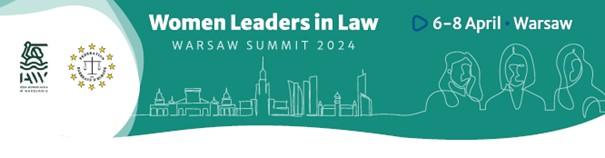
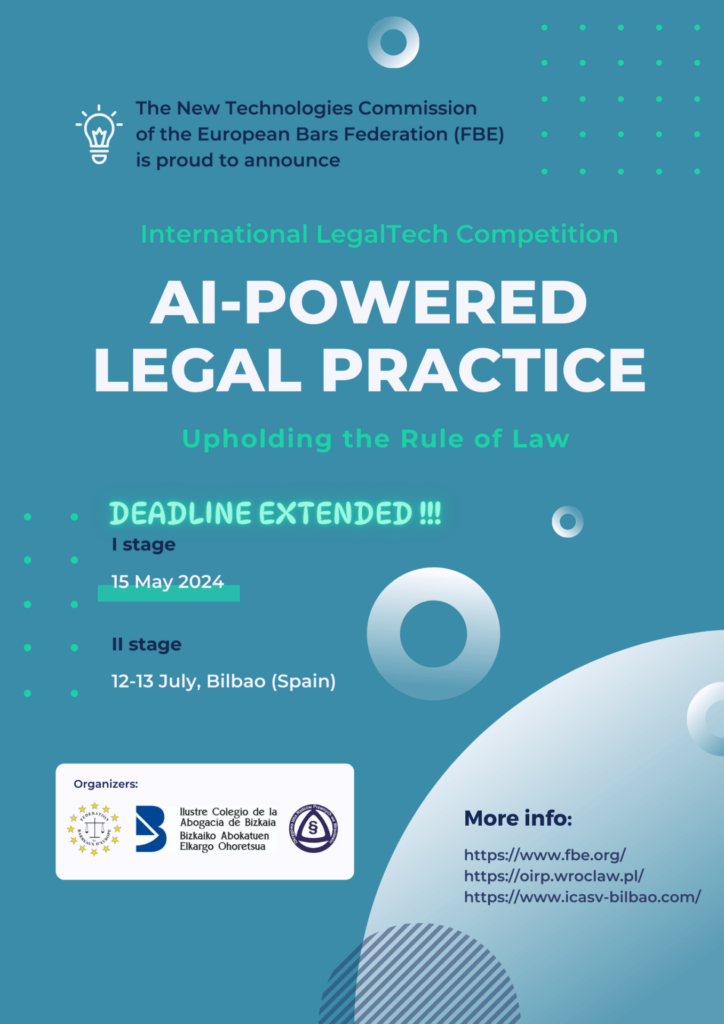
ASSISES DE LA MEDITERRANEE - ALGER, 9-11 MAY 2024 General Congress - Malaga, 6-8 June 2024 INTERMEDIATE MEETING - NANTERRE, 26-28 September 2024The European Bars Federation (FBE) associates over 200 Bar Associations, representing more than 1,000,000 lawyers from 20 countries.Congress of Malaga, 6-8 June 2024 Previous slide Next slideOUR ACTIVITIES 22.04.2024BAR ASSOCIATION – LAWYERS HOME, 24th April 2024, 16 CET 22.04.2024GENERATIVE AI IN THE JUSTICE SYSTEM – Barcelona, 3rd May 2024 18.04.2024Family mediation and cross border effective resolutions – Web event 7th of May 2024, 2:00 – 3:30 pm CETOTHER ACTIVITIES 01.02.2024STAGE INTERNATIONAL DU BARREAU DE PARIS 2024 11.12.2023Sexual Violence & Childhood in War – Ath World Congress of the Mukwege Chair – Angers, 5-7 June 2024 24.10.2023European Union Law Summit for Legal Professionals – Madrid, November 16th and17th, 2023.PERMANENT ACTIONS NT Commission guidelines on generative AI FBE Internship ProgrammeNEWS 13.03.2024Assises de la Méditerranée – Alger, 9-11 May 2024 09.03.2024Women Leaders in Law, WARSAW, 6-8 April 2024 07.03.2024International LegalTech Competition 2024 : New Deadline and Finals Date in Bilbao! SHOW MORE NEWS MEMBERS Azerbaijan Belgium Bulgaria Czech Republic Deutschland España France Greece Italia Ireland Luxembourg Netherlands Österreich Poland Portugal Rep. Kosovo Rep. Serbia Romania Suisse Turkey Ukraine United Kingdom
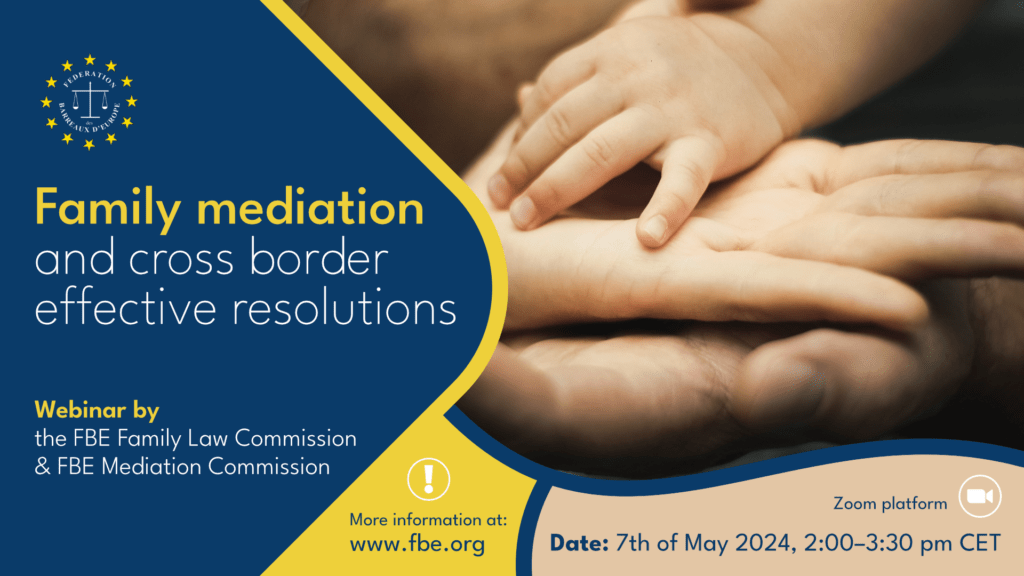
18.04.2024Family mediation and cross border effective resolutions – Web event 7th of May 2024, 2:00 – 3:30 pm CET
11.12.2023Sexual Violence & Childhood in War – Ath World Congress of the Mukwege Chair – Angers, 5-7 June 2024